Thursday, May 29, 2025

New Prayer for the Gifts of the Holy Spirit based on the prayer of Karol Wojtyla Sr., the teachings of St. John Paul II and Pope Francis


A new prayer for the gifts of the Holy Spirit based on the:

  • the prayer taught by Karol Wojtyla, Sr,  the father of St. John Paul II, which the latter called "a major spiritual lesson, longer lasting and more powerful than anything I got from my reading or the courses I took later on,” one of the factors then that helped him become John Paul the Great
  • the insights of St. John Paul himself
  • the latest theology on the Holy Spirit taught by Pope Francis
  • the teachings of St. Thomas Aquinas

Holy Spirit, my Love and my Friend, I ask for 
  • the gift of Wisdom to see Jesus, the world and myself with God’s eyes; 
  • the gift of Understanding to go deep into the boundless love of Jesus, the center of everything; 
  • the gift of Knowledge to look at all things as Jesus’ beautiful gift; 
  • the gift of Counsel to choose the best way to love Jesus and everyone; 
  • the gift of Piety to be one with the Son of God in serving the Father and his family with trusting prayer and mercy; 
  • the gift of Fortitude to be brave and persevering in doing all my duties with the greatest love; 
  • the gift of Fear of the Lord to run away from selfishness and sin, the only cause of Jesus’ agony. Amen.

Monday, May 5, 2025

Twelve Wise Messages of Pope Francis to the Philippines--which he Called “a Great Nation"--that are Worth Cherishing and Practicing

When Pope Francis visited the Philippines, he left behind beautiful and wise teachings that can touch and renew our souls forever.


1. Be committed to the highest ideals and eager to build the civilization of love.

2. Offer yourselves passionately and honestly to the great work of renewing your society.


3. Political leaders have be outstanding for honesty, integrity and commitment to the common good.

4. Reject all forms of corruption which diverts resources from the poor. Corruption kills.

5. What is the most important lesson in life? Learning how to love. True love is being open to God's love which came first and catches us by surprise.

6. To married couples: Never stop being sweethearts (novios)! Stop, think and dream of the good things of your spouse. Love, forgive, be attentive, generous and open, not closed and selfish.

7. Protect your families! See in them your country’s greatest treasure and nourish them always by prayer and the grace of the sacraments.

8. Very important. You must make time each day to rest in the Lord in prayer, so as to know the most important thing: God’s will.

9. Guard against colonization by new ideologies: relativism, lack of openness to children, materialism, culture of the ephemeral, redefinition of the family, etc.

10. Go beyond your homes and care for our brothers and sisters who are most in need. Care for creation not just as citizens, but as followers of Christ.

11. Filipinos are called to be outstanding missionaries of the faith in Asia. To receive Jesus is to have everything; to give him is to give the greatest gift of all.

12. May the Santo NiƱo continue to bless the Philippines and to sustain the Christians of this great nation in their vocation to be witnesses and missionaries of the joy of the Gospel, in Asia and in the whole world.

The Pope is the Vicar of Christ. Jesus speaks to us through him!

Please share this to all the Filipinos you know so that the words of Pope Francis can truly renew our beloved country.


Friday, April 25, 2025

Great job, Lolo Kiko!


This is the original English text of an article published in Spanish in Omnes, a Spanish magazine.  


I am moved while I review a video of my recent close encounter with Pope Francis, our Lolo Kiko. It was last January during the Jubilee for Communicators. He was being wheeled through the central aisle of the auditorium, people crowding towards him. A lady nearby was shouting words of thanks, and so I joined her in expressing my gratitude. Beside me was a fellow Pinoy who kept on repeating, Mabuhay, Lolo Kiko!

Thinking of something personal to say, I shouted: Te queremos mucho, Santo Padre. Great job! It was a conviction I have always kept, despite articles from various Catholic sites that criticize the Holy Father.

As a theologian, I try to base my thinking on current issues from the perspective of faith, which is basically God’s viewpoint. Faith in all the teachings of Jesus and his Church, which includes faith in God who decided to speak and govern through a pope.

From the start, I hoped that Pope Francis would tackle the problems of the relativistic and secularized West as St. Pope John Paul II–the Great–tackled and brought down the totalitarian communistic empire of Eastern Europe. And at once, after hearing his first interview, my heart swelled in expectation.

Pope Francis viewed the Church and the world as a field hospital—so many people wounded, so much suffering. And what struck me most was his emphasis on mercy. For one, it is emblazoned in his own motto: Miserando atque eligendo, having mercy and choosing, showing thus that mercy will permeate his entire pontificate.

More importantly, he gave it a strong theological basis. Mercy is not one more trait of God. Mercy is the central truth of God. Being central, this insight has operationalizing implications on how we are to live our lives, on how the whole Church has to be organized.

After his death, I posted this on my Facebook page, and after thinking more about it, I realized that Mercy truly underlies all of his work:

“I loved Pope Francis and would like to hail all the great things he has done for us. I believe these are his top seven accomplishments:

1. God is Mercy: be merciful. He helped us focus on the innermost truth of God: Mercy. And so if we want to be united to God, our only goal, then we have to be merciful to the people around us, especially the sinners, the ignorant, the poor and all the needy.

2. Centrality of the kergyma: God loves us, died for us, is alive and near us. This central truth of our life, he taught, is the center of all our efforts to renew our lives. Contemplating God who loves us infinitely at every moment moves us to love God and neighbor generously.

3. Primacy and infinite dignity of each person. We will truly be able to love God--a trinity of persons--and neighbor if we value each person's infinite dignity. Current moral deviations--like abortion, same-sex marriage, climate indifference, lack of care for sinners--are rooted in forgetting the infinite dignity of each person, each one of whom we have to serve.

4. Co-responsibility of everyone in the Church (Synodality). Since all of us are other Christs, all of us are Church. All of us are co-responsible in directing our journey towards God. This push of Francis unleashes all of the energies of Catholics to move the Church forward.

5. Reform of Church governance for evangelization. He reformed the Curia and all the instruments of government so that all governance is for evangelization. Since evangelization is the mission and life of the Church--the reason we exist--then the transmission of truth (doctrine) and the Church's governing rules (canon law) should be at the service of leading people to Christ through the Gospel.

6. Joy of the Gospel, of sanctity and the family. The title of three key documents of his contained the idea of joy. Christian life is all of about joy. Living true to Christ's work of evangelization, to his call that we be saints and to caring for the family is a source of the greatest joy.

7. Basis for peaceful coexistence of the Church with liberals, secularists, Muslims and other groups. Pope Francis laid the groundwork for establishing harmony with groups that historically had relationship issues with the Church. Establishing peace is a basic role of any leader so that his organization can flourish. Even more, the once highly critical and very influential liberals are now on the Pope's side.”

From this post, you will understand why my last words to our beloved Lolo Kiko was: Great job!

He understood God, whom he loved with all his heart and might. And understanding God so deeply, he has left a legacy that will not last only until this year. Since mercy is the central truth of God and God’s nature is forever, this legacy is for all times. And we are fortunate—deeply fortunate—for being his children in this new stage of the Church—a stage of the centrality and operationalization of Mercy—that will have to last forever.  


Thursday, April 10, 2025

PORN ADDICTION RECOVERY AND PREVENTION RESOURCES


I. GENERAL OVERVIEW AND SUMMARY

I researched on this topic for around a decade from around 2009 to 2019 especially to help the youth. Also, there was at that time an emerging global interest on the Theology of the Body and how it is applied to daily life.

The key insights from my research can be found in a one-pager that is found in this blog entitled Purity and the Best Remedy for Lust (2015).

Here are its key ideas, but remember: ideas themselves don't work. You have to USE THE MEANS. To get to any destination, you have to use the means to reach there, if not you won't get there. If you want to get there in the best, fastest way, use all the means.

  1. Beg for help from God and be centered on the passion of Christ

    1. Basis: teachings of the saints, e.g. "Cast your cares on God (St. Augustine); Also the first steps in the popular and effective 12-step addiction program

    2. The Passion of Christ shows the greatest love of God. And loving Jesus in his passion brings the greatest spiritual joys that makes one abandon carnal joys. Also, the best way to fight temptation is to go to Jesus on the cross.

  2. Be deeply immersed in the truths of the Theology of the body and the truths of porn and addiction

    1. Have clear and deep reasons on the value of chastity (e.g. each body is an image of God to be reverenced and served) and deeply convince oneself of them again and again, until one has peace in that decision.

    2. See Jesus in each body, for his human form is the basis of all human forms:  Repeating the name of Jesus always is the secret to see Jesus in every human and everywhere. (cf CCC 2668)

    3. Basis: based on insight of John Paul II and St. Thomas Aquinas; and also of the effective Allen Carr program to stop smoking (see new application in II.3.a below called Easypeasymethod.)

  3. Strengthen motivation with list of motives and review when tempted

    1. Basis: this a corollary of the point above. This is a key insight of Porn Trap, one of the best books on porn addiction (see II.3b below). This is also a key point of Fr. Julio Dieguez in his book, He knows Not How; and the effective mentoring technique called Motivational Interviewing

  4. Other key points

    1. Be sincere and go to confession when there are early sparks of passion

    2. See the great evil of this sin, scorn it and flee: Avoid unclean thoughts completely

    3. Identify triggers and avoid them

    4. Read more about theology of the body and spread it.

II. RESOURCES

  1. Prayer Resources

    1. Compilation of Prayers for Purity (2015). Since prayer is the number one factor, here are the best prayers on the internet about purity that I have compiled.  Some people pray any one of these every day. 

    2. Prayer for Purity (2009). Since the top factors are prayer and Theology of the Body, here is a prayer I composed that combines both. 

    3. Benedict XVI's last advice: focus on the greatness of Jesus Christ's suffering, the very center of his entire life

  2. Application of Theology of the Body

    1. Achieving Chastity in an Unchaste World. This is the best booklet that I found on applied Theology Body. The author, Fr. Morrow, says that it has helped people that he coaches and is recommended by Catholic scholars.

    2. Arriving at the Peace of Chastity: a powerpoint presentation (2010). I also created a powerpoint presentation which can be used for talks. These are found in the web: Arriving at the Peace of Chastity, Part I; Arriving at the Peace of Chastity, Part II

    3. Giving Real Love to Your Child. Since parents are the most influential teachers, this is a one-pager I wrote on how parents can educate their children in human sexuality, based on the Vatican’s Truth and Meaning of Human Sexuality: Guidelines for Education within the Family, found here.

  3. Books and websites

    1. The Easy Peasy Method for Quitting Porn. New application of Allen Carr’s addiction recovery system (See I.2.b above): Free book and program here.

    2. Porn Trap. Book that was called groundbreaking and the best book for this in 2009. 


Sunday, April 6, 2025

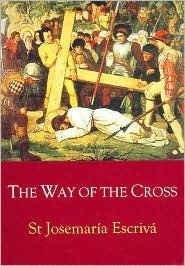
St. Josemaria's Shortcut: Bl Alvaro's Foreword to St. Josemaria's Way of the Cross

One of the most important writings, I would dare say, of Bl. Alvaro del Portillo, is the foreword he wrote for St. Josemaria's Way of the Cross. Read it, even just the first paragraph, and you will find out why. I have not found this in any part of the internet, that is why I am posting it here.  


"Enter into the wounds of Christ Crucified".


When Monsignor Josemaria Escriva de Balaguer proposed this way, to those who asked him for advice on how to deepen their interior life, he was doing no more than pass on his own experience, pointing out the short cut he had been using throughout his life, and which led him to the highest peaks of spiritual life. His love for Jesus was always something real, tangible and strong; it was tender, filial and very moving.


The Founder of Opus Dei used to say, with such encouraging persuasiveness, that being a Christian comes down to "following Christ: that is the secret". And he would add: "We must accompany him so closely that we come to live with Him, like the first Twelve did; so closely, that we become identified with Him".


That is why he advised people to meditate constantly on the passages of the Gospel, and those who have had the good fortune to hear him comment on some of the scenes of the life of Christ, have felt themselves reliving those scenes, actually there, and they have learned to take part in those passages "as just one more person there".


Among all the Gospel narratives, Msgr. Escriva used to dwell with special attention and love on those which tell of the Death and Resurrection of Jesus. There, among many other considerations he made, he would contemplate the Sacred Humanity of Christ, who —in his great yearning to come close to each one of us— reveals himself to us with all the weakness of men and with all the magnificence of God. "That is why", he would say, "I have always advised people to read books on Our Lord's Passion. Such works, full of true piety, bring to our minds the Son of God, a Man like ourselves and also true God, who in his flesh loves and suffers to redeem the world".


Truly, a Christian matures and becomes strong beside the Cross, where he also finds Mary, his Mother.


The Founder of Opus Dei prepared this Way of the Cross as a result of his contemplation on the scenes of Calvary. His desire was that it should serve to help people meditate on the Passion of Jesus, but he never wished to impose it on anyone as a text with which to carry out this very Christian devotion. This was because of his great love for the freedom of people's consciences and the deep respect he felt towards the interior life of each soul, so much so that he never obliged even his own children to adopt specific ways of piety, except, naturally, those which form an essential part of the spirituality that God has wanted for Opus Dei.


This new posthumous work of Msgr. Escriva, like the previous ones, has been prepared to help people to pray and, with the grace of God, to grow in a spirit of reparation —of "love-sorrow"— and of gratitude to Our Lord, who has rescued us at the cost of his Blood.


For this same reason, there have been included, as points for meditation, some words of Msgr. Escriva, taken from his preaching and his conversation which reflected his zeal to speak only about God and about nothing but God.


The Way of the Cross is not a sad devotion. Msgr. Escriva taught many times that Christian joy has its roots in the shape of a cross. If the Passion of Christ is a way of pain, it is also a path of hope leading to certain victory. As he explained in one of his homilies: "You should realize that God wants you to be glad and that, if you do all you can, you will be happy, very, very happy, although you will never for a moment be without the Cross. But that Cross is no longer a gallows. It is the throne from which Christ reigns. And at his side, his Mother, our Mother too. The Blessed Virgin will obtain for you the strength that you need to walk decisively in the footsteps of her Son".


Alvaro del Portillo


Rome, 14 September 1980,

Feast of the Exaltation of the Holy Cross


Thursday, October 24, 2024

Jesus Became Strong: Motivators for Regular Exercise

Jesus is a man of muscular physique and tenacious strength given his work; the roads and mountains he hiked; and the image of his body in the Shroud of Turin. 


From Jesus-Centered: Guide to the Happiest Life: "Jesus became strong" (Lk 2:40)

We can decide to “enter into fellowship with Jesus,” St. Pope Paul VI stresses, “by the most ordinary events of daily life.” What allows this, he says, is Jesus’ hidden life in Nazareth, a village of around 400 people. God lived an ordinary life like yours in “silence, family life and work.” (C 533)

You can commune intimately with Jesus in the following ordinary ways by which you can share in his work of saving all mankind: Fun, games, health and fitness. 

Jesus had fun playing and watching games. He “grew and became strong.” (Mt 11:16-17; Lk 2:40) 

This means he continually grew not just in moral strength, but also in physical strength and health.

Jesus is a man of muscular physique and tenacious strength given his work; the roads and mountains he hiked; and the image of his body in the Shroud of Turin. 

We should also take care of our health, “a precious gift entrusted to us by God,” (cf. C 2288) learning what the medical authorities teach about the right diet, exercise, and healthy lifestyle.


From St. Josemaria: Try to "die very old;" "When the body is well, the soul dances"

When St. Josemaria first heard the Italian saying, "Quando il corpo sta bene, l'anima balla, When the body is well, the soul dances," he was bothered, since it didn't seem to take a supernatural viewpoint and many sick people in pain are happy serving God. Later he changed his mind as he saw that the phrase is a graphic way of pointing out the need for good health to serve God in ordinary work.

He taught: "We cannot allow ourselves the luxury of being sick... There is so much to be done; we need to be fit and well so that we can work for God. That is why you must look after yourselves, so that you die very old, squeezed out like a lemon." 

From Harvard Health: Single most important thing for our health is regular exercise

Exercising regularly, every day if possible, is the single most important thing you can do for your health. In the short term, exercise helps to control appetite, boost mood, and improve sleep. In the long term, it reduces the risk of heart disease, stroke, diabetes, dementia, depression, and many cancers. 

From World Health Organization: Health benefits from regular exercise are significant, while non-activity implies huge cost 

Regular physical activity provides significant physical and mental health benefits. And conversely, physical inactivity increases risk for noncommunicable diseases (NCDs) and other poor health outcomes. Together, physical inactivity and sedentary behaviours are contributing to the rise in NCDs and placing a burden on healthcare systems. 

The global estimate of the cost of physical inactivity to public health care systems between 2020 and 2030 is about US$ 300 billion (approximately US$ 27 billion per year) if levels of physical inactivity are not reduced.

WHO recommends for adults aged 18-64 years old: 

  • Should do at least 150 minutes [2 hours and 30 minutes] of moderate-intensity physical activity throughout the week, or do at least 75 minutes [1 hour and 15 minutes] of vigorous-intensity physical activity, or an equivalent combination of both.
  • For additional health benefits, adults should increase their moderate-intensity physical activity to 300 minutes [5 hours] per week, or equivalent.
  • Muscle-strengthening activities should be done involving major muscle groups on 2 or more days a week.

For children and older adults, check this link.

From Our Bodies are Designed by God to Move: 

The Apostle Paul spoke often of the body being a temple and as such is holy and deserves respect and presents the notion that one of our roles as ministers of God (his representatives) is to take care of our body.

Do you not know that your body is a temple of the Holy Spirit within you, whom you have from God, and that you are not your own?” (1 Corinthians 6:19)

In modern times, Pope St. John Paul II alluded to this:

“In an age that has witnessed the ever-increasing development of various forms of automation, especially in the workplace, reducing the use of physical activity, many people feel the need to find appropriate forms of physical exercise to restore a healthy balance of mind and body.”

From Theology of Exercise: Work and Movement: 

God created man to work. (Gen 2:15)

Work is one biblical category we can use to build a theology of exercise.  

To exercise, your body relies on several systems (nervous, musculoskeletal, etc…) to work together simultaneously to produce movement. You cannot separate exercise and movement; to move is to exercise, and to exercise is to move. 

And movement is inherent in all work. It is how work is accomplished.


— 0 — 

Mnemonic device to easily remember the benefits of exercise and stay motivated: 

STEM-SPA

  1. Soul - be one with Jesus who “grew and became strong”; when the body is well, the soul dances; we care for and work on the Temple of God, our body

  2. Thinking - improves brain structure and function; grows new brain cells; improves judgement and mental health

  3. Energy - sends oxygen and nutrients to your tissues and helps your cardiovascular system work more efficiently

  4. Mood - releases chemicals, such as serotonin and endorphins that trigger a happy feeling; distracts you from daily worries; can make you enjoy the outdoors and have fun.

  5. Sleep - helps you fall asleep faster, get better sleep and deepen your sleep

  6. Prevents disease for Physical health - stroke, high blood pressure, many cancers (e.g. breast, bladder, kidney, lung, and stomach cancers), diabetes, metabolic syndrome, arthritis, dementia, depression, falls, etc; helps manage ADHD

  7. All-around health and Appearance - boosts life span; builds muscles and strong bones; improves weight and skin; wisely prepares you for a good quality of life in old age, while improving the lives of those who are already old.

Sources on the benefits of exercise:


Photo by Family_First from Freerange Stock

Why Exercise: Motivators for Physical Activity

This article has been transferrred to this post: 


Please click the link.