Sunday, August 17, 2014

A MOST INTELLIGENT CHOICE: Rational Foundations of the Truth of Catholic Christian Belief


This article is contained in a free one-page leaflet. The leaflet can be downloaded here.


1.       God is real.


  • Nothing can cause its own existence. In the chain of causes and effects we see, if there is no First Uncaused Cause, then the second causes and their effects could not exist. The big bang implies a Big Banger.

  • Humans, the world and their evolution have such a beautiful, intricate, finely-tuned design which can only be caused by an Intelligent Designer, and not by mindless matter nor by chance. 

  • We know of objective moral facts of right and wrong (e.g. do not steal my things) which obliges humans in all cultures. Its power to oblige can’t come from men obliged by the moral law. It comes from a Lawgiver.

  • Our minds are in contact with eternal, objective and absolute truth superior to our minds (e.g. 2 + 2 = 4 ) and the eternal is divine, not human.

  • If miracles exist, a supernatural miracle-worker exists.

  • If there is no God, life is ultimately meaningless. Only God satisfies the deepest longings of the human heart for eternity. The deep joy of the saints can only come from the divine.

  • To bet on God is your only chance of winning eternal happiness, and to bet against him is your only chance of losing. (Note:  Most points build on Peter Kreeft’s Extremely Brief Arguments for the Existence of God. 

2.      Jesus is the real God made man.


  • Many reliable eyewitness accounts, eminent contemporary Roman historians and archaeological findings attest that the man Jesus really existed in history and was worshipped as God.

  • Jesus did things only God can do, and no other human has done. He stopped a storm in one instant, raised 3 dead persons back to life, multiplied 5 loaves of bread to feed 5000 and turned 500 liters of water into top quality wine.

  • Jesus fulfilled more than 300 prophecies, the first of which was written around 1400 years before his birth. The odds that one person fulfills only 8 of the prophecies is 1 out of 1017 (1 followed by 17 zeros): a virtually mathematically impossible event.

  • Jesus claimed he was God. He said, I and the Father are one. He forgave sins and claimed eternity, omnipresence, and all authority in heaven and on earth. Since he was not a lunatic or a liar, he should be telling the truth: Lord.

  • Jesus was confirmed dead by the best killers of ancient history, the Roman soldiers, and was seen to have resurrected by more than 500 persons.

  • People around Jesus experienced him as divine and called him God. When St. Thomas saw him risen, he exclaimed, “My Lord and my God”. St. John said that Jesus is the Word and “the Word was God.”  Later, St. Paul taught about “Christ who is God over all.” St. Ignatius, a student of St. John, referred to “Jesus Christ our God,”and as “God incarnate”. 

  • Thousands of people in the early years of Christianity, including former skeptics and enemies, gave their lives to testify to the truth that Jesus resurrected and is God. Hundreds of thousands continue to do so throughout history. One estimate says that in the 20th century alone, there were 45.5 million martyrs! (Barrett, Johnson)

 3. Jesus built one Church, the Catholic Church.


  • The Bible and the early Christians testify that Jesus built his Church on Simon, whom he renamed Rock (Petros), and gave him the keys of the kingdom (Mt 16:18-19).  Jesus told him alone to “feed my sheep” (Jn 21:15-17).  The Church has documentary proof  that the Popes succeeded Peter and its bishops are the successors of the other apostles.

  • Jesus and the Church are one.  It is not true the Catholic Church left the true Faith, since the Church is the body of Christ (1 Cor 12:27), and he is inseparable from his body. He promised that “I am with you always” (Mt 28:20), evil “shall not prevail” against his Church (Mt 16:18), and his Spirit “will guide you into all the truth” (Jn 16:13).

  • The Bible is a Catholic book.  It was the Catholic Synods of the 4th century, one led by Pope Damasus’ Council of Rome in 382 AD, which drew up the official list of the books of the Bible. All Christians trust the Catholic Church when they read the Bible.

  • The Bible refutes the “Bible alone" principle. St. Paul says hold to traditions taught by us by word of mouth (2 Thes 2:15).  The Bible also tells of a Council’s authority where St. Peter declared what we believe (Acts 15) and that the Church –not the Bible—is the pillar and the bulwark of the truth (1 Tim 3:15).

  • The true Church is universal, evangelizing in all parts of the world with more than 1.4 billion members in 2025. Compare this with the 2nd biggest Christian group, the Orthodox Churches with only 230M (1/5 of its size).

  • The Church continues to perform divine miracles:  Eucharistic bread turning into blood; appearances of Mary; heroic saints; cures and sacred images that are scientifically unexplained; saints with stigmata, powers of healing, bilocation and prophecy, etc.

  • Since God is Truth, Reason and Love, his Church is the greatest educational and charitable institution in the world. Modern secular research shows that the Church in Catholic Europe gave birth to modern science, university education, economics, the hospital system, support for human rights, and Western Art.


These statements are either true (they agree with reality) or false (they don’t). They can’t be both true and false at the same time and in the same aspect. To say “this is your truth while my truth is opposite” is to fall into relativism, the greatest problem of our time.


Relativism (no objective truth; only subjective “truths”) is (1) self-contradictory, like a square-circle, because if relativism is true then there is objective truth, and so it is false; (2) self-amputation of our mind, limiting our capacity to know reality. This goes against the universally known capability of the scientific mind to know the truth of nature, (3) self-deification: we who were not alive 100 years ago and will not be 100 years hence make ourselves God, the ultimate arbiters of truth, (4) contradictory to the obvious: there are truths that are always true everywhere,  like “mass murder of innocents is evil”.


Given the good evidence in favor of the objective truth of Catholic belief, wouldn’t it take more faith to be a non-believer? Isn’t it logical to try to learn more about this reality, and if convinced, to choose to live by this truth? And also learn more about Jesus’ loving invitation to enjoy God’s life of supreme joy—now and in heaven?


Since Jesus told his Church “He who hears you hears me,” he invites you to read the Compendium of the Catechism of the Catholic Church, found online, for a modern synthesis of Jesus’ wisdom for us today, and learn to experience the peace and joy of living according to God's intelligent design for human beings. 

=========


The free one-page leaflet containing the article can be downloaded here.


RELATED ARTICLE:  THE HYPOCRISY OF CATHOLICS IS A VERY STRONG ARGUMENT FOR THE INFALLIBILITY OF THE CHURCH -- PETER KREEFT. This article went viral globally, reaching 122 K hits after 48 hours. 


See the film The Case for Christ, based on a best-selling book of an atheist who investigated the claims of Jesus as Messiah and Son of God: here.


Wednesday, August 13, 2014

Why Catholic Christianity is a most rational choice

By Dr. Raul Nidoy

This article is contained in a free one-page leaflet. The leaflet in Word Doc can be downloaded here.

Top reasons for the three rational foundations of the truth of Catholic Christian belief: (1) God is real; (2) Jesus is the real God who became man; (3) Jesus built one Church, the Catholic Church.

1.     God is real.
  • Humans and the world have such an intricate, beautiful design which can only be caused by an Intelligent Designer, and not by mindless matter nor by chance.
  • Nothing can cause its own existence. In the chain of causes and effects which we see in the world, if there is no First Uncaused Cause, then the second causes and their effects could not exist.
  • We know of objective moral facts of right and wrong (e.g. help the drowning; do not steal my things) which obliges humans in all cultures. Its power to oblige can’t come from men obliged by the moral law. It comes from a Lawgiver.
  • If there is no God, life is ultimately meaningless. Only God satisfies the deepest longings of the human heart for infinity and eternity.
  • To bet on God is your only chance of winning eternal happiness, and to bet against him is your only chance of losing. (Note:  Most points are from Peter Kreeft’s Extremely Brief Arguments for the Existence of God.)
 2.     Jesus is the real God who became man.
  • Many reliable eyewitness accounts, eminent contemporary Roman historians and archaeological findings attest that Jesus really existed and was worshipped as God.
  • Jesus did things only God can do. He stopped a storm in one instant, raised 3 dead persons back to life, multiplied 5 loaves of bread to feed 5000 and turned 500 liters of water to top quality wine.
  • Jesus claimed he was God. He said, “I and the Father are one”. He forgave sins and claimed eternity, omnipresence, and power over all the angels. Since he was not a lunatic or a liar, he should be telling the truth.
  • Jesus was confirmed dead by the best killers of ancient history, the Roman soldiers, and was seen to have resurrected by more than 500 persons.
  • Thousands of people in the early years of Christianity, including former sceptics and enemies, gave their lives to testify to the truth that Jesus resurrected and is God. Hundreds of thousands continue to do so throughout history. One estimate says that in the 20th century alone, there were 45.5 million martyrs! (A. Socci)
 3.     Jesus built one Church, the Catholic Church.
  • The Bible and the early Christians testify that Jesus built his Church on Simon, whom he renamed Rock (Peter), and gave him “the keys of the kingdom (Mt 16:18-19).  Jesus told him alone to “feed my sheep” (Jn 21:15-17).  History shows that the Popes are his successors.
  • The Bible is a Catholic book.  It was Pope Damasus’ Council of Rome in 382 AD which drew up the official list of the books of the Bible. All Christians trust the Catholic Church when they read the Bible.
  • The Bible refutes the “Bible alone” principle. St. Paul says “hold to traditions which you were taught by us, either by word of mouth or by letter” (2 Thes 2:15).  The Bible also tells of a Council’s authority where Peter declared what “we believe” (Acts 15) and that the “the Church –not the Bible—is the pillar and the bulwark of the truth” (1 Tim 3:15).
  • The true Church is universal, evangelizing in all parts of the world with more than 1.2 billion members today. Compare this with the 2nd biggest Christian group, the Easter Orthodox Churches with only 230M (1/5 of its size) mainly found in Eastern Europe; Southern Baptists 16.3M (1/73).
  • The Catholic Church is the greatest charitable and educational institution in the world and the longest lasting institution. Modern secular historians of science, economics, university education, human rights, international law, hospitals and Western art are showing that Catholic priests, scientists and thinkers were behind the foundation and great achievements in these areas.
If you consider the truth that God built the Church and speaks through it (“He who hears you –the Church—hears me,” said Jesus), it is logical to learn more about Jesus’ plan and how you can be aligned with it.   

Read the Compendium of the Catechism of the Catholic Church online for a a modern synthesis of God’s infinitely loving wisdom for us.

=========
The free one-page leaflet containing the article can be downloaded here.

Saturday, April 19, 2014

Without the resurrection, the Christian faith itself would be dead

"The Christian faith stands or falls with the truth of the testimony that Christ is risen from the dead.

If this were taken away...the Christian faith itself would be dead. Jesus would then remain purely human, and his authority would extend only so far as his message is of interest to us.

He would no longer be a criterion; the only criterion left would be our own judgment in selecting from his heritage what strikes us as helpful...

Only if Jesus is risen has anything really new occurred that changes the world and the situation of mankind. Then he becomes the criterion on which we can rely. For then God has truly revealed himself." (Benedict XVI, Jesus of Nazareth)

How can we find God's revelation today, the criterion on which we can rely?

Jesus' revelation was transmitted throughout the centuries through the Church he built on Peter, the Rock.

Thus, it is imperative that we listen to Peter's successors and the teachings of the Catholic Church, for then we will be listening to the God's own revelation.

---------------------

See free leaflet Ten Reasons the Catholic Church is the One True Church of Jesus. 

Saturday, March 8, 2014

Sub judice rule and the forgotten virtue of epikeia, a reasoned liberal interpretation of the law

Faithful pro-lifers are unusually silent in the face of the pending Supreme Court decision on the Reproductive Health Law, while the pro-choice, pro-RH writers and leaders are having a heyday in the press.

I hope the anti-RH and prolifers are not overly cautious due to the sub judice rule, the non-public commentary of pending court cases -- which "applies almost exclusively, or at least most of the time, to criminal proceedings.. and is stricter with lawyers than with the press."

Moreover, national public morality of the highest importance should have precedence over these judicial niceties, as per the Catholic moral doctrine of epikeia.

Epikeia, the reasoned, liberal interpretation of the law, is in fact a virtue, according to no less than St. Thomas Aquinas!

Thomas explains that "since human actions, with which laws are concerned, are composed of contingent singulars and are innumerable in their diversity, it is not possible to lay down rules of law that would apply to every single case. In framing laws, legislators attend to what commonly happens."

Epikeia  comes from the Greek epieikes, meaning reasonable. It is defined as "an indulgent and benign interpretation of law, which regards a law as not applying in a particular case because of circumstances unforeseen by the lawmaker. The lawmaker cannot foresee all possible cases that may come under the law, and it is therefore reasonably presumed that were the present circumstances known to the legislator he would permit the act, e.g., a mother presumes that she may miss Mass on Sunday when there is no one present to care for her baby."(SQPN)


This doctrine proves once more the primacy of reason -- over everything else, including the law.

And the reasonableness of the Religion of the Logos, the religion according to Reason.

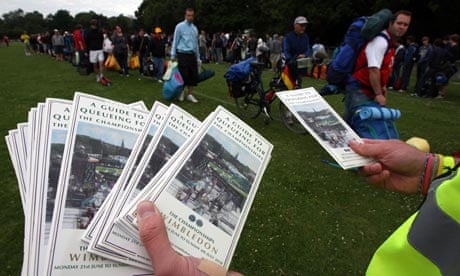
Importance of leafleting


Why are leaflets important?

One of the most successful Catholic evangelizers, St. Francis de Sales, converted 72,000 Calvinists, who at first rejected his preaching, through pamphlets.

St. Josemaria, called by St. John Paul the Great the modern apostle of the laity, started his work of evangelization by printing out a "folleto", translated as pamphlet or leaflet, containing 246 considerations, which will later become his most influential best-seller, The Way.

The great American evangelist Billy Graham, whose lifetime audience is estimated to have reached above 2.2. billion, declared: "Nothing surpasses a tract for sowing the seed of the Good News."

It's logical that pamphlets have such great evangelizing power. Remember that the very Word of God, the Bible, was not put together in one great volume that we presently have until centuries passed. The Word of God was written in epistles, short Gospels, letters, that were passed on by one believer to the next.

Throughout history, great revolutions which have changed the landscape of nations, whether for good or for ill, were preceded by "propaganda movements", using short and effective written materials distributed to the populace. Included here are Luther's Reformation, the French Revolution, the Philippine Revolution,  and the anti-Catholic revolution which generated the Post-Vatican Crisis, during which thousands of priests and nuns left the faith.

Recent Popes have called us to a New Evangelization, to engage people with ideas that can change the world according to Christ's values.

Below is a list of the advantages of spreading leaflets, which puts together points from a Catholic journalist and film-maker, an Evangelical writer and the US Military Psychological Operations Manual, a highly effective method of winning people psychologically:
  • Printed leaflets are an opening for giving people new ideas that can change their lives. People are stuck with their old ideas and usually read or surf for items that already interest them.
  • They respect the freedom of the person. People read it whenever they want.
  • These papers can enter people's houses, when people can't.
  • They forestall heated arguments. 
  • Printed materials tend to have more prestige and credibility than oral persuasion. 
  • Their content is permanent.
  • Leaflets can be hidden and kept in private. 
  • They can explain complicated topics with greater clarity.
  • They can be re-read and further digested.
  • Leaflets are easy to pass on to others, producing a wider multiplier effect. 
  • They are a very useful aid for one-on-one conversation, one of the best ways of evangelizing.  
A writer who always carries with him leaflets to give away passes on this tip:  If you want people to accept your tract from you, don't say, "Would you like this?" They will probably say, "What is it?" and then you're in trouble. Instead, say, "Did you get one of these?" That question has a two-fold effect. You stir up curiosity and make them ask "One of what?" That's when you pass it to them. That phrase also makes them feel as though they are missing out on something. And so they are.
If you want people to accept your tract from you, don't say, "Would you like this?" They will probably say, "What is it?" and then you're in trouble. Instead, say, "Did you get one of these?" That question has a two-fold effect. You stir up curiosity and make them ask "One of what?" That's when you pass it to them. That phrase also makes them feel as though they are missing out on something. And so they are.

Read more at: http://www.christiananswers.net/evangelism/methods/tracts.html
f you want people to accept your tract from you, don't say, "Would you like this?" They will probably say, "What is it?" and then you're in trouble. Instead, say, "Did you get one of these?" That question has a two-fold effect. You stir up curiosity and make them ask "One of what?" That's when you pass it to them. That phrase also makes them feel as though they are missing out on something. And so they are.

Read more at: http://www.christiananswers.net/evangelism/methods/tracts.html
St. Josemaria, taught: "God's truth has to reach everywhere through publications, movies, radio, TV... And this task if yours!" He also exclaimed: "Let us cover the world with printed paper!"

=======================================

Please check out the other free leaflets in this blog. Please distribute them widely. 


Foundations of the Faith (Apologetics)  

Summaries of the Faith and Key Catechetical Ideas

Encountering Jesus (in the Eucharist, the Bible, the Pope, Mary, the Poor)

Family and Chastity

You can find other free leaflets on these sites: