Wednesday, October 12, 2022

GENDER THEORY: Key points from Pope Francis and the Vatican


POPE FRANCIS ON GENDER THEORY


Gender theory is part of world war to destroy marriage.
 A great enemy of marriage today: the theory of gender. Today there is a world war to destroy marriage. Today there are ideological colonizations which destroy, not with weapons, but with ideas. Therefore, there is a need to defend ourselves from ideological colonizations. (Address to Priests, Religious, Seminarians and Pastoral Workers during the Apostolic Journey to Georgia and Azerbaijan, October 1, 2016) 

Gender theory is a step backwards and creates a problem. I ask myself if the so-called gender theory is not an expression of frustration and resignation, which seeks to cancel out sexual difference because it no longer knows how to deal with it. Yes, we risk taking a step backwards. The removal of difference in fact creates a problem, not a solution. (General Audience on Man and Woman, April 15, 2015) 

Ideology of choosing one’s own gender is terrible ideological colonization. In Europe, America, Latin America, Africa, and in some countries of Asia, there are genuine forms of ideological colonization taking place. And one of these - I will call it clearly by its name – is [the ideology of] ‘gender’. Today children – children! – are taught in school that everyone can choose his or her sex. Why are they teaching this? Because the books are provided by the persons and institutions that give you money. These forms of ideological colonization are also supported by influential countries. And this is terrible! (Address to the Polish Bishops during the Apostolic Journey to Poland, July 27, 2016) 

Age of sin against God the Creator. In a conversation with Pope Benedict, he said to me: ‘Holiness, this is the age of sin against God the Creator’. He is very perceptive. God created man and woman; God created the world in a certain way… and we are doing the exact opposite. Pope Benedict’s observation should make us think. (Address to the Polish Bishops during the Apostolic Journey to Poland, July 27, 2016) 

We don’t have absolute power over our bodies. Pope Benedict XVI spoke of an “ecology of man.” “Man has a nature that he must respect and that he cannot manipulate at will.” Thinking that we enjoy absolute power over our own bodies turns into thinking that we enjoy absolute power over creation. (Laudato Si’ 155) 

Value our own body to meet someone different and joyfully accept specific gifts. Valuing one’s own body in its femininity or masculinity is necessary if I am going to be able to recognize myself in an encounter with someone who is different. In this way we can joyfully accept the specific gifts of another man or woman, the work of God the Creator, and find mutual enrichment. It is not a healthy attitude to seek to cancel out sexual difference. (Laudato Si’ 155) 

Sex and gender cannot be separated. It needs to be emphasized that ‘biological sex and the socio-cultural role of sex (gender) can be distinguished but not separated.’ It is one thing to be understanding of human weakness and the complexities of life, and another to accept ideologies that attempt to sunder what are inseparable aspects of reality. (Amoris Laetitia 56) 

It’s a sin for creatures to replace the Creator. Let us not fall into the sin of trying to replace the Creator. We are creatures, and not omnipotent. Creation is prior to us and must be received as a gift. At the same time, we are called to protect our humanity, and this means, in the first place, accepting it and respecting it as it was created. (Amoris Laetitia 56) 

Help the young to appreciate their own body, to be self-aware and not be afraid of being different. The young need to be helped to accept their own body as it was created, for ‘thinking that we enjoy absolute power over our own bodies turns, often subtly, into thinking that we enjoy absolute power over creation… An appreciation of our body as male or female is also necessary for our own self-awareness in an encounter with others different from ourselves. Only by losing the fear of being different, can we be freed of self-centeredness and self-absorption. (Amoris Laetitia 285)


VATICAN'S MALE AND FEMALE HE CREATED THEM: Towards a path of dialogue on the question of gender theory in education


Context: there is an educational crisis on affectivity and sexuality due to the challenges of gender theory:
  • denies the difference between a man and a woman and their complementarity
  • sees sexual difference as a mere product of cultural influences 
  • gender identity is a choice of the individual and can change
  • leads to destabilization of family 
  • Pope Francis in Amoris Laetitia: gender ideology “leads to educational programs and laws that promote a personal identity and emotional intimacy radically separated from the biological difference between male and female.” 
Methodology: 
  • Dialogue through listening, reasoning and proposing 
  • Pope Francis: “while the ideologies of gender claim to respond ‘to what are at times understandable aspirations’, they also seek ‘to assert themselves as absolute and unquestionable, even dictating how children should be raised’, and thus preclude dialogue”. 
  • We have to be open to research that deepens our understanding of the differences between men and women 
History of gender theory. Listening
  • 1990s theory of a radical separation between gender and sex, with the former having priority over the latter. 
  • Vision of a society without sexual differences
  • Nature and culture are contraposed
  • Concept of "queer" 
    • sexuality as extremely fluid, flexible, and constantly moving
    • liberation of the individual from sexual definition
    • disappearance of rigid classifications
Points of agreement and criticisms. Reasoning
  • Points of agreement
    • need to educate children to respect every person in their particularity and difference, so that no one should suffer bullying, violence, insults or unjust discrimination based on their specific characteristics, such as special needs, race, religion, sexual tendencies, etc
    • the values of feminity
      • willingness of women to dedicate themselves in a special way to human relationships, especially for the benefit of the weakest
      • St John Paul II - women exhibit a kind of affective, cultural and spiritual motherhood, which is of inestimable value 
  • Point of criticism
    • radical gender theory 
      • speaks of process of denaturalisation, that is a move away from nature 
      • sexual identity and family are based on a confused concept of freedom in the realm of feelings and wants
  • Rational arguments
    • clarify the centrality of the body as an integrating element of personal identity and family relationships
    • the data of biological and medical science shows that ‘sexual dimorphism’ (only two sexes) can be proved by science, as, for example, by the study of chromosomes. 
    • importance of the dialogue between faith and reason. 
Proposing a Christian anthropology: an integral ecology of man
  • Genesis: male and female He created them 
  • Human nature
    • to be understood in light of the unity of body and soul
    • the “horizontal dimension” of “interpersonal communion” is integrated with the “vertical dimension” of communion with God. 
  • Education
    • Parents have the primary rights and duties with regard to the education of their children — rights and duties which cannot be delegated or usurped by others. 
    • Children have the right to a mother and a father, and that it is within the family that children can learn to recognize the beauty of sexual differences. 
    • Schools are called to assist families and to dialogue with parents, respecting also the family’s culture.
    • Rebuild an “alliance” between family, schools, and society, which can produce educational programs on affectivity and sexuality that respect each person’s own stage of maturity regarding these areas and at the same time promote respect for the body of the other person
The path of dialogue: Transforming concerns and misunderstandings 
  • the path of dialogue, which involves listening, reasoning and proposing, appears the most effective way towards a positive transformation of concerns and misunderstandings, as well as a resource that in itself can help develop a network of relationships that is both more open and more human
  • Catholic schools have a legitimate aspiration to maintain their own vision of human sexuality
    • a democratic state cannot reduce the range of education on offer to a single school of thought
  • Importance for Catholic schools:
    • to take into consideration the age-group of the students to be taught
    • to treat each person with respect. 
    • to accompany, discreetly and confidentially, reaching out to those who are experiencing complex and painful situations
    • to be an environment of trust, calmness, and openness, particularly where there are cases that require time and careful discernment
    • to provide a patient and understating ear, far removed from any unjust discrimination

CATECHISM OF THE CATHOLIC CHURCH

Accept your sexual identity. Sexual complementarity is for the good of marriage and the family. Everyone, man and woman, should acknowledge and accept his sexual identity. Physical, moral, and spiritual difference and complementarity are oriented toward the goods of marriage and the flourishing of family life. The harmony of the couple and of society depends in part on the way in which the complementarity, needs, and mutual support between the sexes are lived out. (CCC 2333)

Man and woman have equal personal dignity. By creating the human being man and woman, God gives personal dignity equally to the one and the other. Each of them, man and woman, should acknowledge and accept his sexual identity. (CCC 2393)




Sunday, October 2, 2022

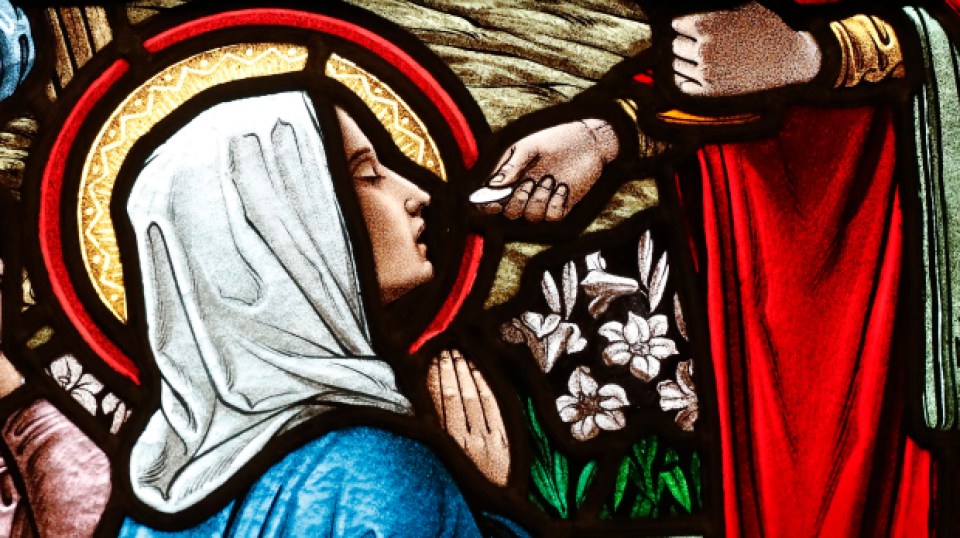
FREQUENT COMMUNION: why and how to promote it

If the goal of our life is union with Jesus, then we have to go as often as possible to the sacrament by which Jesus "unites us to himself in a most perfect union." (St. John Paul II)


Our ultimate goal: union with Jesus

To be highly effective, we need to know our ultimate goal. The recently published Directory for Catechesis clearly states the goal of all the work of the Church and of catechesis: communion with Jesus Christ.  “Formation does not consist in acquiring information or filling ourselves with ideas," notes theologian and prelate Msgr. Fernando Ocariz. "The objective of formation is identification with Jesus Christ.”

Shortest and surest way to the goal: Eucharistic communion  

Once the end goal is clear, we have to use the best, most effective means to achieve it. St. John Paul the Great tells us that in eucharistic communion, "God joins us to himself in the most perfection union." Indeed, who else but Jesus himself in person can unite us to himself. 

Thus, other great saints have pointed out the superlative power of Holy Communion:

  • Most beneficial and most delightful prayer (St. Alphonsus)
  • Shortest and surest way to heaven (St. Pius X)
  • Greatest way to enrich our soul with virtue and rapidly advance to a high degree of perfection (St. Teresa)
Biblical and early Christian practice: daily communion

Based on the logic of this supreme sanctifying power, the early Christians received communion not once in a while, but daily:

Every day they broke bread in their homes. (Acts 2:46) 

Together with other saints of the time, St. Cyprian, born around 210 AD, attests to this fact:

We are who in Christ receive the Eucharist daily, so as not to be separated from Christ through sin. 

This is not surprising because Jesus taught us to pray:

Give us this day our daily bread. (Mt 6:11)

Strongly encouraged: Help everyone to receive as often as possible, even daily

Thus, the Church through its Catechism says: 

“The Church strongly encourages the faithful to receive the holy Eucharist on Sundays and feast days, or more often still, even daily.” (C 1389) 

Given the clarity of the above, it is important for Christian educators to help children receive Jesus more often, if possible daily. 

This year 2022, Dualtech Training Center, after seeing that only 15% of the students were receiving communion during the school Mass, took specific steps to form the students and eventually reached 54% reception at one point.

This is what they did:

  • The formation council clearly saw the importance of communion and decided to meet regularly, observe the numbers and take the necessary steps.  
    • This council increased the allotted time for the class of Religion so they can have more time to discuss these most important topics: Confession, Holy Mass and Communion and prayer. 
    • They allotted more time for Confession. 
  • The training and mentoring council asked everyone to be involved and to pray for the students. 
    • Reception of the sacraments was made the priority in the weekly report during the weekly meeting. 
    • The first numbers reviewed in the meeting is how many received Holy Communion, how many went to Confession.
    • They monitor the progress through a graph, and evaluate for further improvement. 
    • The students are free to go to Mass or not. 
  • The teachers explained the value of the sacraments almost daily, and encouraged the students to go to Confession and receive Communion. They also conduct orientation to prepare the students for Confession. Before the Mass, the teachers also give a 15-minute preparation before the Mass where the Gospel is read and meditated on. 
  • The mentors pray for their mentees. This is their first task. They follow them up if they have questions. They listen to each student on why they were not receiving and help each one to overcome the problems, especially by encouraging Confession. 
  • The chaplains spoke more about Confession and Communion during the homilies. During the seminar for new enrollees, they explain the sacraments and invite them to these, becoming their friends, and giving homilies to which the students can relate and apply to their lives. 
  • The student leaders, who assist the teachers, invited their co-students to the sacraments. They also give Confession tutorials when needed; they give support and even accompany them to the Confessional. 
Guide to Holy Communion, the most delightful prayer

So that the students can enjoy the time with Jesus during communion with much fruit and look forward to it, this blog features a guide to Eucharistic communion, entitled Most Delightful Prayer: A Guide to Holy Communion, which you can access here. It contains general ideas from the saints on how to pray during the 10 to 15 minutes that Jesus is in us, and some traditional prayers for communion. To easily print and distribute the guide to the students, you can download it in PDF here, or you can redo the doc in Word here. 

MOST DELIGHTFUL PRAYER: Guide to Holy Communion

Communion is "the most beneficial and delightful prayer." (St. Alphonsus) God joins us to himself in the most perfect union. (St. John Paul II)

To easily print this guide for mass distribution, you can download it in PDF here, or you can redo the doc in Word here. 

GENERAL IDEAS 

Receive Jesus like Mary. 

As Mary said “Fiat” [Be it done] to receive Jesus’ body, we say “Amen,” to receive the same body. (St. Pope John Paul II) 

“I want to be like Mary...to be Mary for Jesus, to take the place of His Mother...she must make me one with Him.” (Bl. Maria Candida of the Eucharist) 

Converse with Jesus as your King, Doctor, Teacher and Friend. 

Converse with Jesus as your King, a king who wants to reign in your heart, with peace, joy and justice. He expects deeds of love. 

Converse with Jesus as your Doctor. He heals your selfishness, especially the worst sickness: pride that hides our sins. Be totally sincere with him, tell him the whole truth. 

Converse with Jesus as your Teacher. He teaches us the knowledge of love for God without limits, and in God, for all men. Our life belongs to God. We spend it generously for people.  We tell him: Teach us to forget ourselves, so that we may concern ourselves with you and with all souls.

Converse with Jesus as your Friend. “I have called you friends,” he says. He laid down his life for us. He cries for us if we have a dying Christian life. “I say to you, my friend, arise and walk.” (St. Josemaria) 

See the benefits and stay with him. 

Think that communion greatly benefits your soul and that Jesus is so delighted to be with you in communion. Stay with him and do not lose this opportunity. (St. Teresa) 

Love, thank and praise him, and ask his help. 

Spend the time telling Jesus you love him. (St Alphonsus) 

Do not only talk lovingly with him, but also thank and praise him and especially ask his help. (Pope Pius XII) 

Give him our deepest and most sincere thanks. (St. Augustine) 

Jesus is saying to you, “What do you want me to do for you. I came from heaven to give you grace, Ask me what you want and you will be heard.” (St. Teresa) 

Ask that he hears our prayer, that he frees our thoughts and actions from evil, increase our faith and guide our minds, grant us holy thoughts and lead us to his own joys. (St. Augustine) 

Keep silent and enjoy your God. 

Beware of talking too much. Remain in silence and enjoy your God. God says: “I am he to whom you have to give your whole self, so you no longer live in yourself but in me.” (Thomas a Kempis)

SOME COMMUNION PRAYERS

Pray these with the burning passion of one who has just fallen in love...as if this is your last chance to talk to Jesus. (St. Josemaria) You can also use the thoughts here as conversation points with Jesus. 

Prayer after Communion by St. Thomas Aquinas 

Sweetest Jesus, Body and Blood most Holy, be the delight and pleasure of my soul, my strength and salvation in all temptations, my joy and peace in every trial, my light and guide in every word and deed, and my final protection in death. Amen. 

Prayer to Jesus Christ Crucified 

My good and dear Jesus, I kneel before you, asking you most earnestly to engrave upon my heart a deep and lively faith, hope and charity, with true repentance for my sins, and a firm resolve to make amends. As I reflect upon your five wounds, and dwell upon them with deep compassion and grief, I recall, good Jesus, the words the prophet David spoke long ago concerning yourself: They have pierced my hands and feet; they have counted all my bones. 

Self-Dedication to Jesus Christ by St. Ignatius 

Lord Jesus Christ, take all my freedom, my memory, my understanding, and my will. All that I have and cherish you have given me. I surrender it all to be guided by your will. Your grace and your love are wealth enough for me. Give me these, Lord Jesus, and I ask for nothing more. 

Anima Christi 

Soul of Christ, sanctify me. Body of Christ, save me. Blood of Christ, inebriate me. Water from the side of Christ, wash me. Passion of Christ, strengthen me. O Good Jesus, hear me. Within your wounds hide me. Permit me not to be separated from you. From the wicked foe, defend me. At the hour of my death, call me and bid me come to you That with your saints I may praise you For ever and ever. Amen. 

Stay with me Lord by St. Padre Pio (excerpt) 

Stay with me, Lord, for it is necessary to have you present so that I do not forget you. You know how easily I abandon you. Stay with me, Lord, for you are my life, and without you, I am without fervor. Stay with me, Lord, for you are my light, and without you, I am in darkness. Stay with me, Lord, to show me your will. Stay with me, Lord, for I desire to love you very much, and always be in your company. Stay with me, Lord, if you wish me to be faithful to you. Stay with me, Lord, for it is you alone I look for, your Love, your Grace, your Will, your Heart, Your Spirit, because I love you and ask no other reward but to love you more and more. With a firm love, I will love you with all my heart while on earth and continue to love you perfectly during all eternity. Amen.

NOTE: To easily print this guide for mass distribution, you can download it in PDF here, or you can redo the doc in Word here. 

OTHER COMMUNION PRAYERS

These are not included in the one-page guide. 

Liturgical prayers (taken from Jesus-Centered: Guide to the Happiest Life)

Lord Jesus Christ, Son of the Living God, by the will of the Father and the work of the Holy Spirit, your death brought life to the world. By your Body and Blood free me from all my sins, and from every evil. Keep me faithful to your teaching, and never let me be parted from you. 

We have consumed, O Lord, this divine Sacrament, the perpetual memorial of the Passion of your Son; grant, we pray, that this gift, which he himself gave us with love beyond all telling, may profit us for salvation. 

Renewed by partaking of this divine gift, we pray, O Lord our God, that by the example of the saints, bearing in our body the Death of Jesus, we may strive to hold fast to you alone. 

Complete within us, O Lord, we pray, the healing work of your mercy, and graciously perfect and nurture us that we may please you in all we do. 

We ask you, Lord, as we receive the divine mysteries: grant your servants, to whom you have given a love for us [relatives and friends], pardon for sins, consolation in this life and unfailing guidance, that all of us, united in your service, may rejoice together before your face. 

May this sacrament of charity, O Lord, make us fervent with the fire of holy love, so that, drawn always to your Son, we may learn to see him in our neighbor. 

Having been made partakers of this table of unity and charity, we beseech your mercy, O Lord, that through the work you have given us to do we may sustain our life on earth and trustingly build your Kingdom. 

O God, who constantly feed and strengthen the Church with your Sacraments, grant to us, who have been nourished at the heavenly table, that, by obeying your teachings of love, we may become life-giving leaven and a means of salvation for the human family. 

Having been made partakers of this spiritual food, we pray, O Lord our God, that, steadily imitating the Blessed Virgin Mary, we may always be found intent on service of the Church and may know the joys of doing your will.

Total Abandonment to the Will of God by St. Faustina 

Jesus-Host, whom I have this very moment received into my heart, through this union with you I offer myself to the heavenly Father as a sacrificial host, abandoning myself totally and completely to the most merciful and holy will of my God. From today onward, your will, Lord, is my food. Take my whole being; dispose of me as you please. Whatever your fatherly hand gives me, I will accept with submission, peace and joy. I fear nothing, no matter in what direction you lead me; helped by your grace I will carry out everything you demand of me. I no longer fear any of your inspirations nor do I probe anxiously to see where they will lead me. Lead me, O God, along whatever roads you please; I have placed all my trust in your will which is, for me, love and mercy itself. 

Communion Prayer by St. Bonaventure (new translation)

Pierce the depths of my soul, O sweetest Lord Jesus, with the most delightful and most saving wound of your love, with true, serene and most holy apostolic charity, that my soul may always languish and melt with love and longing for you. May it yearn for you and swoon for your dwellings, and long to be detached and be with you. May my heart always hunger for you, the bread of angels, the refreshing food of holy souls, our daily, life-sustaining bread, containing all sweetness and relish, and all delicate delight. May I always hunger for you and feed on you—you on whom the angels desire to gaze. May the depths of my soul be filled with the sweetness of your taste. May my heart always thirst for you, the flowing source of life, the fountain of wisdom and knowledge, the fountain of eternal light, the gushing stream of pleasure, the abundance of the house of God. May my heart always desire you, seek you and find you. May I run to you and reach you; think of you, speak of you and do all things to the praise and glory of your name, with humility and discretion, with love and delight, with ease and affection, and with perseverance until the end. May you always be my only hope, my complete assurance, my wealth, my delight, my pleasure, my joy, my rest and tranquility, my peace, my delicacy, my fragrance, my sweetness, my food, my refreshment, my refuge, my help, my wisdom, my inheritance, my possession and my treasure—in you, may my mind and heart be fixed and fastened, and immovably rooted now and always. Amen. (See here for the original Latin and English.)

Daily Communion Prayer of St. Mother Teresa (based on St. John Henry Newman) 

Dear Jesus, help me to spread thy fragrance everywhere I go. Flood my soul with thy spirit and love. Penetrate and possess my whole being so utterly that all my life may only be a radiance of thine. Shine through me and be so in me that every soul I come in contact with may feel thy presence in my soul. Let them look up and see no longer me but only Jesus. Stay with me and then I shall begin to shine as you shine, so to shine as to be a light to others. Amen.

Prayer of St. John Chrysostom

We give Thee thanks, O most merciful Lord and Redeemer of our souls, for this day Thou hast made us worthy by means of these immortal and heavenly mysteries. Direct our way; keep us in fear of Thee; guard our lives; and make our steps firm through the prayers and intercessions of the glorious and holy Mother of God and ever-Virgin Mary. Be exalted above the heavens, O God, and above all the earth, Thy glory, now and forever and ever. Amen.

For the Fruits of the Passion 

Most sweet Jesus Christ, grant that your passion may be to me a power by which I am strengthened, protected, and defended. May your wounds be to me food and drink by which I am nourished and sustained. May the sprinkling of your blood be to me an ablution for all my sins. May your death prove to me life everlasting and may your cross be to me an eternal glory. May your resurrection be my sure hope of future glory. In these be my refreshment, my joy, my preservation and sweetness of heart. 

The Universal Prayer (attributed to Pope Clement XI) 

Lord, I believe in you: increase my faith. I trust in you: strengthen my trust. I love you: let me love you more and more. I am sorry for my sins: deepen my sorrow. I worship you as my first beginning, I long for you as my last end, I praise you as my constant helper, and call on you as my loving protector. Guide me by your wisdom, correct me with your justice, comfort me with your mercy, protect me with your power. I offer you, Lord, my thoughts: to be fixed on you; my words: to have you for their theme; my actions: to reflect my love for you; my sufferings: to be endured for your greater glory. I want to do what you ask of me: in the way you ask, for as long as you ask, because you ask it. Lord, enlighten my understanding, strengthen my will, purify my heart, and make me holy. Help me to repent of my past sins and to resist temptation in the future. Help me to rise above my human weakness and to grow stronger as a Christian. Let me love you, my Lord and my God, and see myself as I really am: a pilgrim in this world, a Christian called to respect and love all whose lives I touch, those in authority over me or those under my authority, my friends and my enemies. Help me to conquer anger with gentleness, greed by generosity, apathy by fervor. Help me to forget myself and reach out toward others. Make me prudent in planning, courageous in taking risks. Make me patient in suffering, unassuming in prosperity. Keep me, Lord, attentive in prayer, temperate in food and drink, diligent in my work, firm in my good intentions. Let my conscience be clear, my conduct without fault, my speech blameless, my life well-ordered. Put me on guard against my human weaknesses. Let me cherish your love for me, keep your law, and come at last to your salvation. Teach me to realize that this world is passing, that my true future is the happiness of heaven, that life on earth is short, and the life to come eternal. Help me to prepare for death with a proper fear of judgment, but a greater trust in your goodness. Lead me safely through death to the endless joy of heaven. Grant this through Christ our Lord. Amen. 

Meditation of St.Therese 

O how sweet it is, the first kiss of Jesus to my soul. Yes, it is a kiss of love. I feel I am loved, and I too say: “I love Thee, I give myself to Thee forever!” Jesus asks nothing of me, demands no sacrifice. Already for a long time past, He and I have watched and understood each other. This day our meeting is no longer a simple look but a fusion. No longer are we two. I have disappeared as the drop of water which loses itself in the depths of the ocean. Jesus alone remains: The Master, the King.

Prayer of St. Thomas Aquinas

I give thanks to Thee, O Lord, most holy, Father almighty, eternal God, that Thou hast vouchsafed, for no merit of mine own, but out of Thy pure mercy, to appease the hunger of my soul with the precious Body and Blood of Thy Son, Our Lord Jesus Christ. Humbly I implore Thee, let not this holy communion be to me an increase of guilt unto my punishment, but an availing plea unto pardon and salvation. Let it be to me the armour of faith and the shield of good will. May it root out from my heart all vice; may it utterly subdue my evil passions and all my unruly desires. May it perfect me in charity and patience; in humility and obedience; and in all other virtues. May it be my sure defence against the snares laid for me by my enemies, visible and invisible. May it restrain and quiet all my evil impulses, and make me ever cleave to Thee Who art the one true God. May I owe to it a happy ending of my life. And do Thou, O heavenly Father, vouchsafe one day to call me, a sinner, to that ineffable banquet, where Thou, together with Thy Son and the Holy Ghost, art to Thy saints true and unfailing light, fullness of content, joy for evermore, gladness without alloy, consummate and everlasting happiness. Through the same Christ our Lord. Amen.

Prayer to Our Lord

I beseech Thee, O most meek and loving Jesus, that this immortal Host may return Thee thanks on my behalf, may reconcile and restore me to Thee. May it procure pardon for me, a sinner, and lead me to everlasting life. Amen. 

How sweet and lovely is this Bread of heaven which Thou hast given us! How wonderful is the rest, how full the peace which they experience who receive Thee after a sincere and sorrowful confession of their sins! For this, O my Jesus, be Thou praised a thousand times! In the matter of sin I have been most unfortunate; but now not only do I enjoy true comfort of soul, but I also believe that I have had a foretaste of the peace of heaven. How true it is, O Lord, that our soul was made for Thee, and can enjoy true peace only when it rests in Thee! From the bottom of my heart, therefore, do I thank Thee and I firmly resolve ever to fly sin and its occasions and to take up my lasting dwelling in Thy divine Heart, from which I hope the grace and help to love Thee until death. Amen. (Traditional Catholic Prayers)

Thanksgiving Psalm (Psalm 95)

Come, let us sing for joy to the LORD;

    let us shout aloud to the Rock of our salvation.

 Let us come before him with thanksgiving

    and extol him with music and song.

For the LORD is the great God,

    the great King above all gods.

In his hand are the depths of the earth,

    and the mountain peaks belong to him.

The sea is his, for he made it,

    and his hands formed the dry land.

Come, let us bow down in worship,

    let us kneel before the LORD our Maker;

for he is our God

    and we are the people of his pasture,

    the flock under his care.

Today, if only you would hear his voice,

“Do not harden your hearts as you did at Meribah, 

    as you did that day at Massah in the wilderness,

where your ancestors tested me;

    they tried me, though they had seen what I did.

For forty years I was angry with that generation;

    I said, ‘They are a people whose hearts go astray,

    and they have not known my ways.’

So I declared on oath in my anger,

    ‘They shall never enter my rest.’”

Stay with me Lord by St. Padre Pio (complete version)

Stay with me, Lord, for it is necessary to have you present so that I do not forget you. You know how easily I abandon you. 

Stay with me, Lord, because I am weak and I need your strength, that I may not fall so often. 

Stay with me, Lord, for you are my life, and without you, I am without fervor. Stay with me, Lord, for you are my light, and without you, I am in darkness. 

Stay with me, Lord, to show me your will. 

Stay with me, Lord, so that I hear your voice and follow you. 

Stay with me, Lord, for I desire to love you very much, and always be in your company. Stay with me, Lord, if you wish me to be faithful to you. 

Stay with me, Lord, for as poor as my soul is, I want it to be a place of consolation for you, a nest of love. 

Stay with me, Jesus, for it is getting late and the day is coming to a close, and life passes; death, judgment, eternity approach. It is necessary to renew my strength, so that I will not stop along the way and for that, I need you. It is getting late and death approaches, I fear the darkness, the temptations, the dryness, the cross, the sorrows. O how I need you, my Jesus, in this night of exile! 

Stay with me tonight, Jesus, in life with all its dangers. I need you. Let me recognize you as your disciples did at the breaking of the bread, so that the Eucharistic Communion be the Light which disperses the darkness, the force which sustains me, the unique joy of my heart. 

Stay with me, Lord, because at the hour of my death, I want to remain united to you, if not by communion, at least by grace and love. 

Stay with me, Jesus, I do not ask for divine consolation, because I do not merit it, but the gift of your Presence, oh yes, I ask this of you! 

Stay with me, Lord, for it is you alone I look for, your Love, your Grace, your Will, your Heart, Your Spirit, because I love you and ask no other reward but to love you more and more. With a firm love, I will love you with all my heart while on earth and continue to love you perfectly during all eternity. Amen.

Prayer to the Virgin Mary 

Mary, holy virgin mother, I have received your Son, Jesus Christ. With love you became his mother, gave birth to him, nursed him, and helped him grow into manhood. With love I return him to you, to hold once more, to love with all your heart, and to offer to the Holy Trinity as our supreme act of worship for your honor and for the good of all your pilgrim brothers and sisters. Mother, ask God to forgive my sins and to help me serve him more faithfully. Keep me true to Christ until death, and let me come to praise him with you forever and ever. Amen. 

Prayer to St. Joseph 

St. Joseph, father and guardian of virgins, to whose faithful keeping Christ Jesus, innocence itself, and Mary, the virgin of virgins, were entrusted, I pray and beseech you by that twofold and most precious charge, by Jesus and Mary, to save me from all uncleanness, to keep my mind untainted, my heart pure, and my body chaste; and to help me always to serve Jesus and Mary in perfect chastity. Amen. 

Syro-Maronite Farewell to the Altar 

Remain in peace, O Altar of God. May the offering that I have taken from you be for the remission of my debts and the pardon of my sins and may it obtain for me that I may stand before the tribunal of Christ without condemnation and without confusion. I do not know if I will have the opportunity to return and offer another sacrifice upon you. Protect me, O Lord, and preserve your holy Church as the way to truth and salvation. Amen. (Compendium Appendix) 

Saturday, September 24, 2022

Straight talk with a child going to a secularist university


A friend asked me for guidance on what he can tell his child who is going to a Western secularist university which can undermine the faith of his child. Putting myself in the shoes of the dad, these are the talking points I would bring up to the son or daughter. It will also be good for any teacher or mentor of a graduating High School student to bring up these points in their own way to their students. 

You will be going to a university that will give you a great advantage in the world. This is a very good thing, but I would like to make sure that you have some clear ideas. 

Despite the excellent secular things you will get, you will be facing dangers for what is most important in your life, in our life. Many of your professors will not believe in God and will undermine your faith and morals, and many of your classmates will be like them. You will therefore face pressures from many sides: from above, from your peers and from the whole environment. This is very strong pressure, and I know many good boys and girls from our country who have succumbed to it. And these were top students, who loved the catechesis they received, and had an above-average spiritual life.  

And so it should be very clear to you that the most important thing in life is God and our faith in him.   As Jesus himself said: "What does it profit a man if he gains the whole world, but suffers the loss of his soul." 

This is the purest truth. I hope your school and I have made clear that this is also the most intelligent, rationally-based choice. (See this article for the basis)

God is our everything; he is the source and the end goal of our life. Only through him can we enjoy the greatest possible happiness every day and throughout eternity. Not being with him is therefore the greatest failure. This failure, more than anything else, will be my greatest pain. If you have any doubts in this aspect, given original sin and the pressures of the environment, you can easily succumb. Since I have a grave responsibility before God to give you a solid education, I would like to know what you think about what I just said.

It is important for the parent to listen to what the son or daughter has to say regarding these things and have a frank conversation to clarify things. 

The next steps will have to be based on the result of the conversation. It is best if the next steps are considered and determined by the student himself, with guidance from the parent. 

Generally, everyone will need continual inputs in both heart and mind to persevere in Christian faith and morals.

  • Input of grace and prayer. You will need to go regularly to Mass and Confession, and practice daily humble prayer. A close friendship with Jesus--a relationship of burning love--will be your best support, for this is the very goal of our life. Everything depends, teaches Pope Benedict XVI, on our intimate friendship with Jesus. 
  • Input of Catholic Christian teachings. Because there will be a continual input of secularist and amoral ideas, you will need a continual input of Christian ideas, to inspire you and motivate you. For example, read the New Testament everyday, so you can get to know the life of Christ. Read a good Christian book every day. Here are lists of good Christian readings. 
  • Input of good Catholic community. A strong support is the company and encouragement of good Catholic friends. 
  • Input of the Christian mission. The best defense is a good offense. The first habit of highly effective people, says Stephen Covey is: Be proactive, not reactive. Affect your environment; don't let the environment affect you. We are Christians, so like him, we spread Christianity to the people around us. Go with a sense of mission--of having been placed there by God for a great purpose. 
Because I am the one shouldering your education, I am interested that we continue to talk about all of these every so often during your stay in college. 

--- o ---

These inputs, in fact, should be stressed, in one way or another, all throughout the schooling of the child, not just at the very end, before he or she leaves for college. 

Note: The Newman Guide to Colleges points out that there are universities which are Catholic in name but are secularist in nature, and they can undermine faith and morals more than some non-Catholic colleges. 


Basic Christian Readings

For spiritual reading, there are several lists in the internet such as those of: 

The book, Jesus-Centered Life: Guide to the Happiest Life has this list: 

• Compendium of the Catechism of the Catholic Church (online)

• Youcat (Youth Catechism of the Catholic Church) 

• Faith Explained by Leo Trese

• Theology for Beginners by Frank Sheed

• My Way of Life by St. Thomas Aquinas

• Walking with God by Kilian Healy (online)

• Rome Sweet Home by Scott and Kimberly Hahn

• Our Lady of Fatima by William Thomas Walsh

• The Curé d’Ars by Francis Trochu

• Time for God, Way of Trust ad Love, Interior Freedom, Searching and Maintaining Peace, Called to Life, etc. by Jacques Philippe

• Understanding “Our Father;” The Lamb’s Supper; Lord, Have Mercy; etc. by Scott Hahn

• Catechesis on Prayer, the Apostles, the Fathers, etc. by Pope Benedict XVI (online)

• Prayer: the Great Means of Salvation and Perfection, School of Christian Perfection, The Passion and Death of Jesus Christ, etc. by St. Alphonsus Liguori (online)

• Spiritual Exercises by St. Ignatius of Loyola

• The Practice of Humility by J. Pecci/Pope Leo XIII (online)

• Introduction to the Devout Life, Treatise on the Love of God, etc. by St. Francis de Sales (online)

• Little Catechism, Sermons, etc. by St. John Mary Vianney (online)

• The Way, The Furrow, The Forge, Christ is Passing By and Friends of God by St. Josemaría Escrivá (online)

• To Know Christ Jesus, Theology and Sanity, etc. by Frank Sheed

• Life of Christ, Three to Get Married, etc. by Fulton Sheen

• Public Life of our Lord Jesus Christ and the Passion and Death of our

Lord Jesus Christ by Archbishop Alban Goodier, S.J.

• The Hidden Power of Kindness by Lawrence Lovasik

• In Conversation with God, Lukewarmness, etc. by Francisco

Fernandez-Carvajal

• Saints in the World, God and Children, etc. by Jesus Urteaga

• In Silence with God, Frequent Confession by Benedict Baur

• Back to Virtue, Before I Go, etc. by Peter Kreeft

• Heart of Virtue by Donald DeMarco

• Faith Applied by Jean Daujat

• Letters to a Young Catholic, The Truth of Catholicism, etc. by George Weigel

• Conversation with Christ by Peter Thomas Rohrbach

• Meditations and Devotions, Sermons, etc. by St. John Henry Newman (online)

• The Story of a Soul: The Autobiography of St Thérèse of Lisieux (online)

Saturday, September 10, 2022

He Knows Not How: Growing in Freedom, and other articles and videos by Fr. Julio Dieguez


Below are translated notes on the key points of Formar Personas Libres, a Spanish booklet written by Fr. Julio Dieguez, the newly appointed Regional Vicar of Opus Dei in the Philippines. The later title is Sin que él sepa cómo: Crecer en libertad, found in Amazon here. He speaks about it in Spanish in Youtube here. The English version is He Knows Not How: Growing in Freedom which is in Amazon here. He spoke about it in PAREF's Jesus-Centered Conference here.

At the bottom of this article, you can find other articles of Fr. Julio. 

1.     Well-formed person: 

  • when he does what he wants, he does what is good because his will is identified with Jesus Christ.

  • autonomously affirms the good, because he recognizes it as good

  • To be truly free, your choices have to come from correct judgment of reality

2. The problem of "weak-willed" persons

  • Wants to improve and looks for help, but can't

  • Root: What he values (sees as worth the effort); because he can give a lot of effort for other things he values

  • Underneath weak will - a erroneous judgement about the true value of goods which gives a full life

  • His thinking towards action (practical reason) is influenced by his passions more than his reason

3. The cause of freedom is reason -- St. Thomas.


  • The will always follows a judgement of reason. We always choose what we think is good for us 

  • To strengthen reason, you need virtues, good choices. Thus the tremendous importance of good relationships, family, friends who show how virtues are lived. Joy of these people have an important role in being good examples: a sign of well-established virtue. Thus the importance that activities are attractive, not only because they are fun but because they are authentic and sincere. 


4. The problem of voluntarism: a lack of reasoning.


  • The voluntarist only depends on willpower. He does not use his intelligence to see the attractiveness of what is good. 

  • To overcome voluntarism:

    • Give reasons

    • Reflect on these reasons

    • Base your actions on these reasons

    • Don't replace reasons with a rule

  • A strong will requires a reason that is based on firm principles: the virtues.

  • To stimulate the use of reason in governing our actions means to grasp the goal of our actions.

5. Virtues: the strength of freedom


  • What is formative are the virtues, which are acquired by repeating good choices. This means that what is formative are one's own decisions or choices -- not the decision of others. One forms oneself.

  • The role of the formator is to help each one to form himself well in the struggle to acquire virtues, by corresponding to the grace of God.

  • Since virtue is a perfection of freedom, formation is a formation in freedom and for freedom.  There is no other true formation.

  • Virtuous person loves the good passionately


6. To form virtue means to form prudence


  • The objective is not to accumulate rules or criteria but forming prudence: the capacity to reason out on one’s own and reach the right conclusion.

  • In the beginning rules and criteria help, but as one develops one needs fewer rules


7. The four keys to formation


  1. Initiative. St. Josemaria – help the soul to want –he voluntarily chooses—to do the will of God. Don’t command, advise.

  • Not to help passively, but to pray, think so as to propose, open horizons, help to discover, suggest

  • The goal of formation is not when he chooses to do good; but only when he does it because he wants to—chooses it freely. He wants to do good because it is good.

  • To concretize fight, there has to be a dialogue:

o   Propose and ask

o   Listen and assess

o   Ask: what is his idea; what struggle is good; what he thinks God expects from him; what he would like to do,

o   Then propose: “I think this might be good, what do you think?”; “Think about it, bring it to your prayer and then let’s talk about it.

  1. Convictions.

  • Formation is more a matter of convictions than of decisions: not tell them what we have decided but to transmit convictions.

  • Formation is more than exhorting but a matter of helping to understand.

o   More difficult but more beautiful

o   Demands thinking deeply; not using prefabricated formulas

  • Transmit key ideas (ideas madres) from which he draws the conclusions

  • Indispensable: Help people to think

o   Encourage questions on the whys

o   Teach how to pose the question and find the solutions

  • Avoid the impression that it is not necessary to understand and that you only have to trust

  • Take advantage of mistakes. If we prevent people from making mistakes, then we also prevent them from doing right; we don’t form their prudence

  • Be positive. Show the beauty of the good; learn to give deep reasons which are the most attractive

3. Perspective. St. Josemaria: take time into account

  • Fight is centered on virtues and not on acts: acquiring a second nature

  • Devote time to explains the why

  • Make them see the sense of the fight in terms of the goal

4. Affection. First in importance and has to be in all the steps. You can only form if you love.


Summary:

  • Only one’s own decisions are formative

  • Not only that they know, but they think; important now, because people don’t accept authority

  • Truth cannot be imposed; The force has to be in the arguments; For this, reading good literature

  • Examples form more than concepts; Show good films

  • We will only influence people who trust us; one has to earn this: they see that we know what we are talking about; not just someone in a position

  • Respect freedom

  • Know how to listen, value their point of view; speak respectfully

  • Affection is the first source of authority and credibility

  • Help them feel a great freedom

  • Help to remove obstacles that impede acting with interior freedom—that they feel at ease and unrestrained (con soltura)


ARTICLES WRITTEN BY FR JULIO DIEGUEZ

Click on the article title to read it. 


With our whole heart - on the virtue of chastity